Trust over Control: Redefining Festival Practice
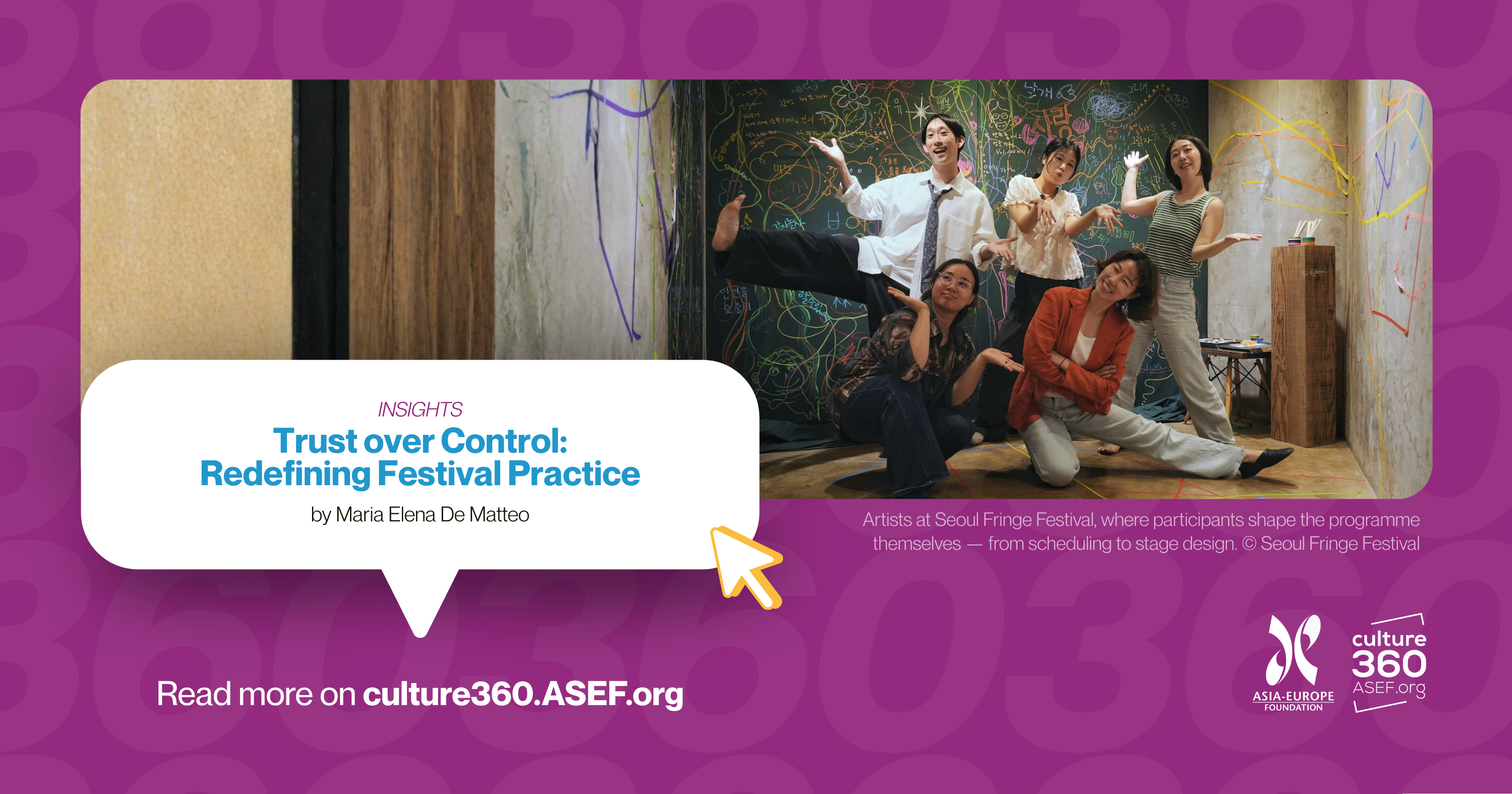
In an interview between Maria Elena De Matteo and Seoul Fringe Festival director Gyohee Baek, find out how surrendering programming control to artists in the context of Seoul Fringe has created a fairer, faster, and more sustainable festival model — and why this matters for cultural institutions everywhere.
Introduction
When Gyohee Baek took over Seoul Fringe Festival, she faced a choice that most arts organisations avoid: relinquish control. Rather than curating the festival programme from above, she and her team stepped back and let artists negotiate directly with one another — deciding venues, schedules, and resources themselves. The result has been surprising.
The festival operates more efficiently, artists collaborate more generously, and the programming reflects genuine artistic diversity rather than institutional vision. As the global cultural sector grapples with questions of equity and sustainability, Seoul Fringe offers a rare case study in how fair practice can be embedded into institutional systems.
Maria Elena De Matteo spoke with Baek about the moment she decided to take this risk, what changed when she let go, and what the model reveals about trust and community.
1.Starting from risk not ideals
Much of the global conversation on fair practice starts from values and ideals, but is rarely translated into concrete systems. In your case, the shift at Seoul Fringe began with a concrete risk: giving up control. What was the moment when you decided the festival had to take that risk?
Gyohee Baek: Seoul Fringe Festival was born with a risk as an open-access festival. By its nature, the festival wants to and has to welcome everyone willing to take part. At the same time, this is the greatest strength of the festival: the diversity of participants. This diverse range of artists and their works cannot be achieved by the vision of an artistic director or programmers. I think this is the defining characteristic of fringe festivals.
I did not decide to risk giving up control. Rather, I chose to maximise our greatest asset: actively bring in artists into the festival-making process, and let them decide how they participate. This worked beautifully.
2. Letting go of control
Once the festival team stepped back and artists were asked to negotiate directly with one another, what changed first: the atmosphere, the speed of decisions, or the sense of responsibility?
Gyohee Baek: At first, there was a sense of competition. Artists were ready to achieve what they wanted — the venue and the schedule. But once we established a unified negotiation protocol, the atmosphere shifted. It became noticeably softer and more collaborative.
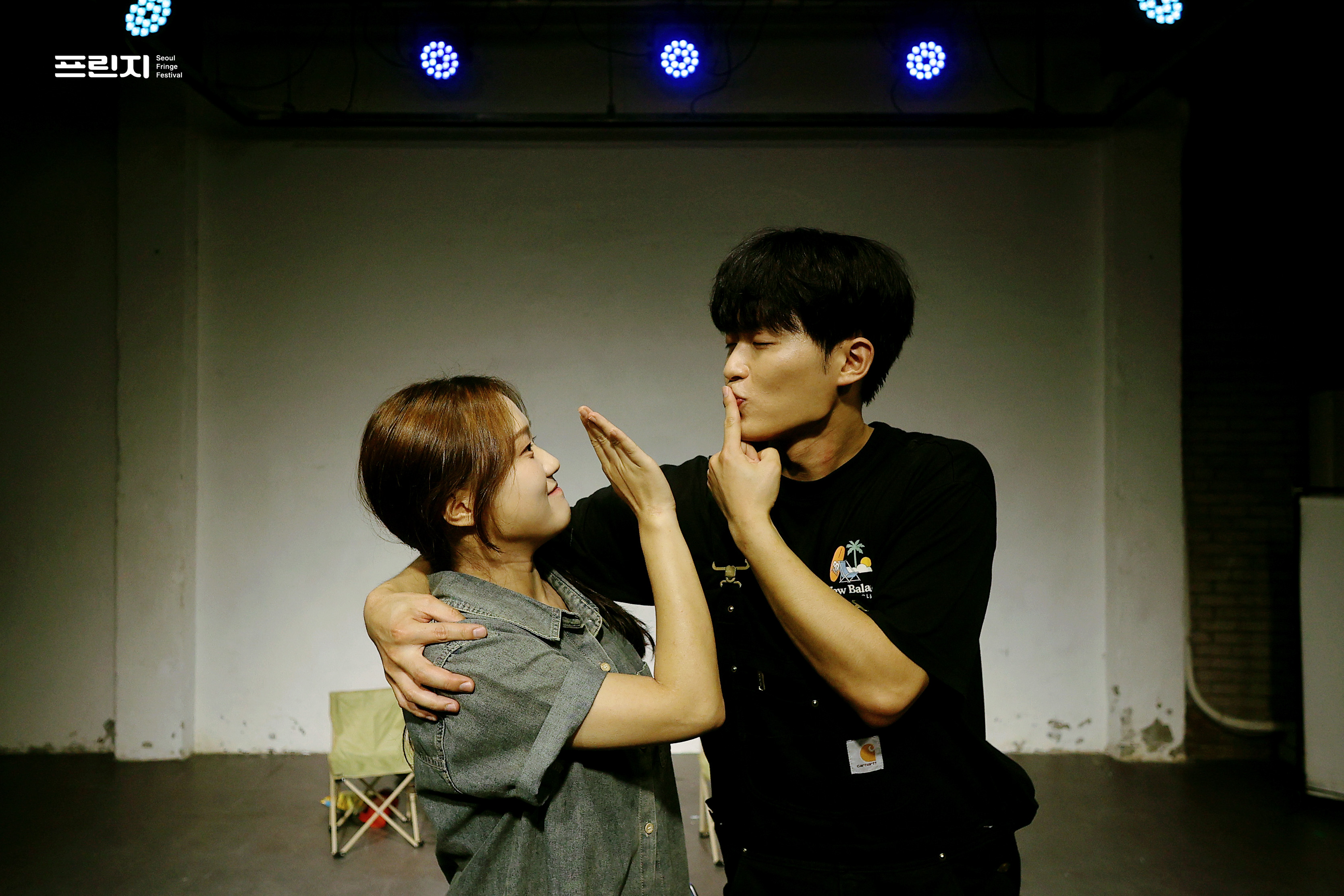
1. A performance at Seoul Fringe Festival, where open access and artistic diversity define the programme. Photo © Seoul Fringe Festival.
3. What surprised you most
You have described the process as faster and more constructive than expected. What did artists do differently from what you had anticipated — and what did that reveal to you?
Gyohee Baek: The most surprising and gratifying part was how returning artists naturally became mediators across all groups. We did not intentionally position them there, but it happened organically.
They shared their accumulated knowledge — how much time they needed for transitions between performances, how to share lighting plans or sound systems to allow more time for physical stage setup. They offered to share equipment and venues, and even to compromise on timetables for first timers.
At that moment, I realised that artists are essential collaborators in this process and that the festival team and I should trust them more and share more of the festival-making process with them.
4. Where the model struggles
From the outside, the model appears remarkably smooth. From the inside, where do you still see tension, imbalance, or unresolved challenges?
Gyohee Baek: Of course, there were people with louder voices — more experienced, older, and often male. For some artists participating in Seoul Fringe for the first time, these dynamics could feel intimidating or exclusionary. The festival team did its best to address those situations, but I think we can improve the system.
However, even when uncomfortable situations emerged, other fellow artists actively advocated for those being marginalised. Through this process, I have learned to trust our community more than rigid frameworks. Rules alone can reinforce existing power imbalances; human intervention and solidarity matter more.
2. The Seoul Fringe Festival brings together artists across disciplines in a model built on peer negotiation and shared resources. Photo © Seoul Fringe Festival.
5. Lessons for others
As international interest in fair practices grows, many festivals look for models they can adopt. From your perspective, what is the most common misunderstanding that organisations outside South Korea might have if they tried to replicate Seoul Fringe's approach?
Gyohee Baek: Our case is not easy at first glance, so I do not think most people would even consider replicating it (laughs). When I first proposed peer scheduling, most people said it would not be possible within our community. Even our artists and staff were dubious.
This process requires a delicate approach to communication, trust in the community, and a strong commitment to ongoing dialogue. Yes, it is difficult, but it is worth it.
A possible misunderstanding is that peer scheduling will run smoothly once you implement it. Some rounds did, but others did not. Even after peer scheduling, we organised at least two to three meetings and workshops for artists to discuss and negotiate the details. The initial scheduling is just the beginning — the real work is the ongoing negotiation between artists, continuously refining how they work together.
6. Redefining the role of festivals
Looking ahead, beyond programming performances, what role do you believe festivals should play in shaping fairer and more sustainable cultural ecosystems in the years to come?
Gyohee Baek: Festivals need their own philosophy and must implement this philosophy in their programming. If a festival only showcases lavish, expensive, world-famous artists, I think they are only half successful. A festival is a platform — not only for creatives and artists, but also for our society and community.
In this context, festivals should always sit within the wider community and ask what they can do for it and society. That is where cultural change takes root.
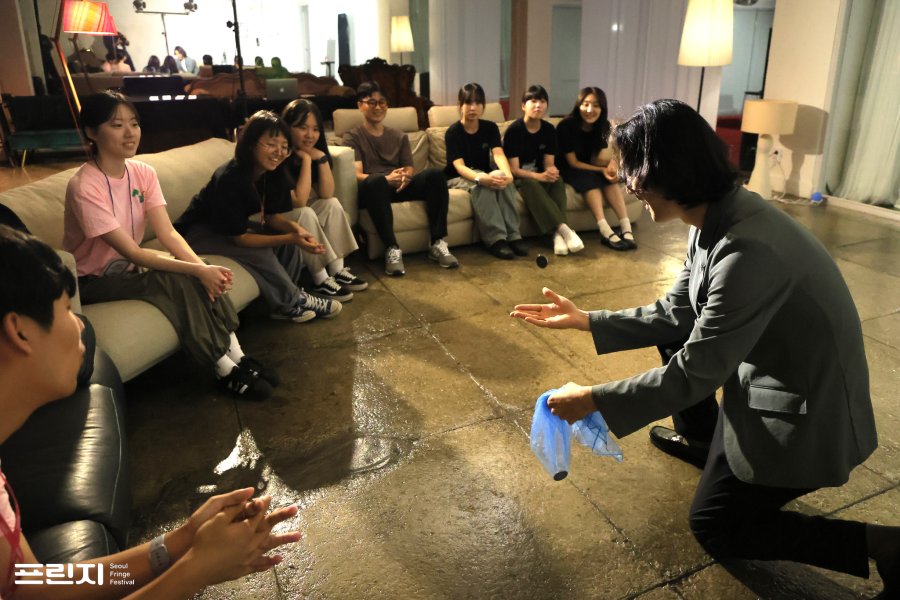
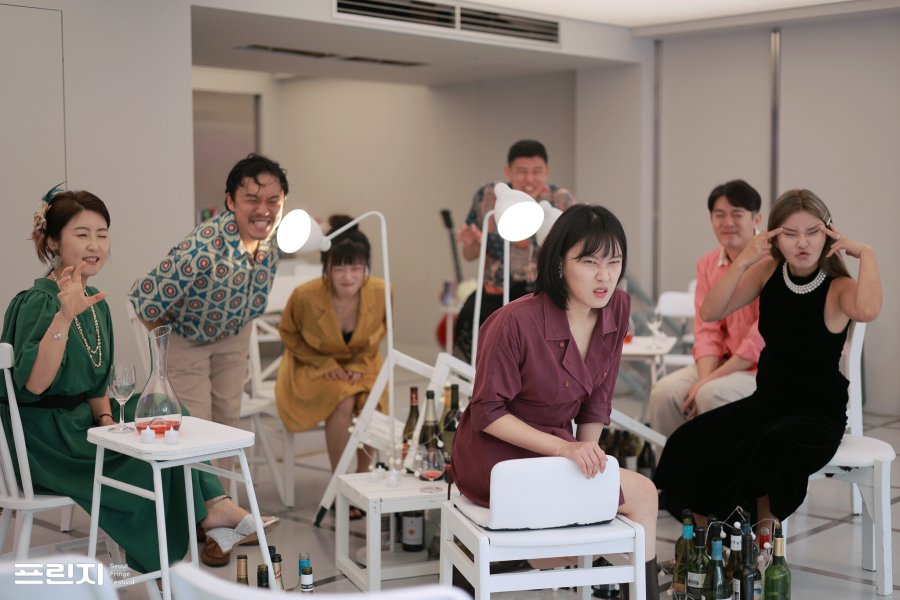
3. At Seoul Fringe Festival, the boundary between artist and audience is part of the conversation, not an afterthought. Photo © Seoul Fringe Festival.
Conclusion
What emerges from Baek's account is a simple but radical insight: fair practice is not something imposed from above through policy or rules.
It emerges when institutions create the conditions for people to act fairly toward one another.
By trusting artists to negotiate their own participation, Seoul Fringe discovered that the barriers to equitable practice were often institutional rather than human. The model is difficult to replicate because it requires institutions to genuinely relinquish control — something most organisations are reluctant to attempt.
Yet for those willing to take the risk, the benefits are demonstrable: faster decisions, stronger community bonds, and programming that reflects artists' diverse visions rather than a single curatorial vision.
Cover image: Artists at Seoul Fringe Festival, where participants shape the programme themselves — from scheduling to stage design. © Seoul Fringe Festival.
About the Interviewee
Currently working as the Director at Seoul Fringe Network, Gyohee Baek has been built her career around her mission 'Building sustainable arts ecosystem and communicating social values of the arts'. She has worked without boundaries of festival production, research, and policy building, and keeps expanding by collaborating with various partners and focusing on arts in climate change, creating social conversations on the social impacts of the arts, and developing artists' networks.
About the Interviewer
Maria Elena De Matteo is a communications and sustainability strategist specialising in the intersection of arts, culture, and environmental impact. With extensive experience in both Asia and Europe, she founded We Move Waves, a consultancy that partners with cultural organisations, artists, and festivals to promote sustainable practices and social justice through creative campaigns. Maria Elena is also a certified environmental assessor for festivals and live events through A Greener Future and co-authored the EUNIC Sustainability Toolkit, launched in October 2024.