Media Partnership | Interview with Yokohama Performing Arts Meeting (YPAM)
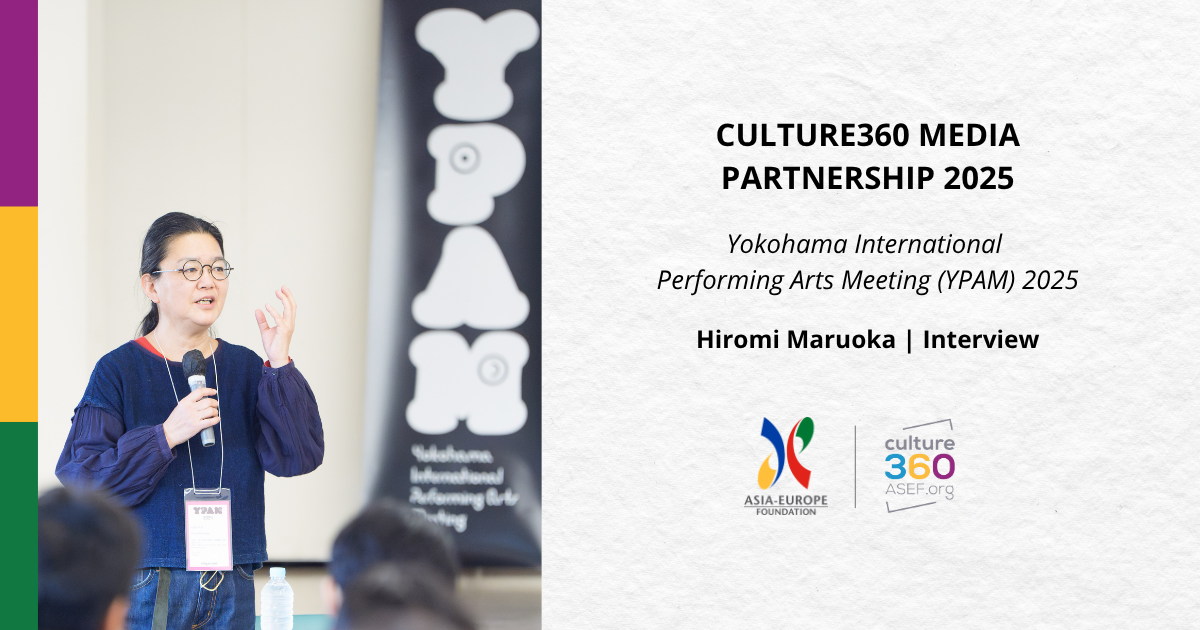
As part of culture 360's Media Partnership with the Yokohama International Performing Arts Meeting (YPAM), we speak with Director Hiromi Maruoka on the origins and evolution of Japan's longest-running performing arts platform - from its beginnings following a trade fair format, to its expansion into a dynamic programme addressing various aspects of the performing arts community.
1. This year, the Yokohama International Performing Arts Meeting (YPAM) 2025 celebrates its 30th edition, establishing the meeting as Japan’s longest-running performing arts platform. What were the initial aims and needs that YPAM set out to achieve, and how have these ambitions grown as the festival has continued?
Hiromi Maruoka: When it was founded in 1995, the project was modeled after trade fairs, with the aim of promoting the distribution of Japanese performing arts works both domestically and internationally. At that time, the target scope was broad—within the large category of “performing arts,” it encompassed all genres, including traditional performing arts and commercial theater. When I took over as director in 2005, we shifted direction toward focusing on contemporary performing arts.
In 2011, when we moved the event from Tokyo to Yokohama, we changed the name from “Market” to “Meeting". This was also the year we relocated to Yokohama and the year that the Great East Japan Earthquake and the Fukushima Daiichi Nuclear Power Plant accident occurred. From both social and cultural perspectives, our sector faced a situation in which it became impossible to operate an international platform without addressing these events. We aimed to develop a programme that could help restore trust—even just a little—amongst peers and colleagues from abroad who came to participate in a country that had just caused a nuclear accident.
Later, with the Tokyo Olympics bid, the Japan Foundation—which had financially supported YPAM — established the Asia Center. That became the turning point for shifting our programming toward artists and works from Japan and Asia. At the time, not only at YPAM but across Asia, a question emerged: “What constitutes contemporaneity in Asia?”
In a region where classical music and ballet—arts rooted in Western tradition—coexist alongside each country’s traditional performing arts as their own “classics" we were searching for what contemporary performing arts meant to us. This shift was accompanied by a larger movement toward de-centering Western perspectives—not only outside the West, but also within Western institutions themselves. Over the following five years, we introduced numerous outstanding artists and works from Asia, while also forming a space where peers from around the world gathered for approximately ten days to experience performances, exchange knowledge, and share perspectives and issues surrounding contemporary performing arts.
Personally, I believe that between 2015 and 2020, TPAM (as it was then called) succeeded in establishing a completed model for a platform based in Asia. However, as you know, the pandemic struck—and in TPAM’s case, this coincided with organisational changes amongst its supporting institutions.
As a result, we temporarily let go of the former model and spent several years exploring what was possible under pandemic conditions. During this period, major changes occurred in our sector, including the rapid development of online environments and a growing focus on “green mobility” in response to climate change. Additionally, social changes such as widening inequality, the rise of neoliberalism, and the acceleration of individualism also influenced the performing arts environment.
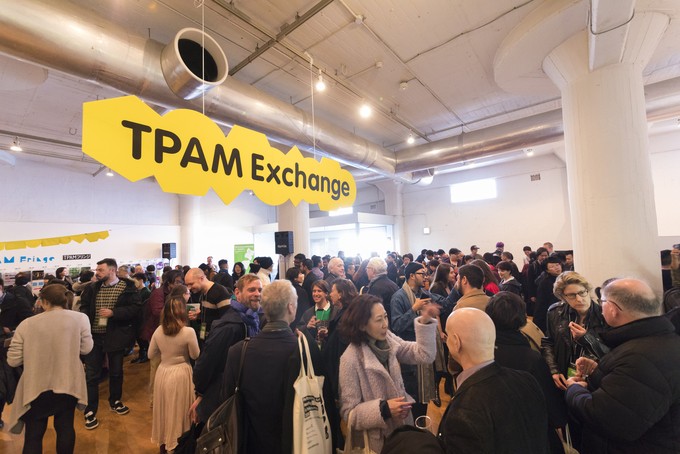
1.TPAM 2018 © Hideto Maezawa
Amid global shifts in values and expanding inequality, we questioned whether the conventional model — in which a small number of people evaluates works, curates them, and presents them—was still viable, especially in the performing arts. As a result, we placed greater emphasis on the non-juried, open-call fringe programme. At the same time, we recognised that without works that symbolise YPAM’s identity, it would be difficult for participants to find meaning in joining the platform. Above all, we strongly believed that a performing arts platform should never abandon performance itself simply because circumstances are difficult.
Thus, we continued to present works—particularly those that re-examine Japanese history—such as Fukushima Trilogy by DULL-COLORED POP, Wandering Love (Trilogy) by TAIHEN, Jasmine Town by Yang Zhen in collaboration with 30+ residents of Yokohama Chinatown, A Notional History by Five Arts Centre, The Japanese Ideology by OLTA, Voice of Void by Ho Tzu Nyen in collaboration with YCAM, and ENCORE by Yuni Hong Charpe.
Contextualised within the continual shifts of global structures and values surrounding the performing arts in recent years, YPAM is preparing for its next stage. Moving forward, we will restructure YPAM Direction—which has taken previous forms such as experimental programming by young producers, guest directors curating domestic and international works, commissioning, and international co-productions—into an experimental forum.
Considering generational shifts among artists and presenters, rising travel and technical costs, the expansion of training and residency programmes, and the changing ideological and economic landscape of the international performing arts sector, we believe that the very concept of what constitutes a “work” is undergoing transformation.
The new YPAM Direction aims to re-examine these fundamentals and explore what performing arts can be in the next era.
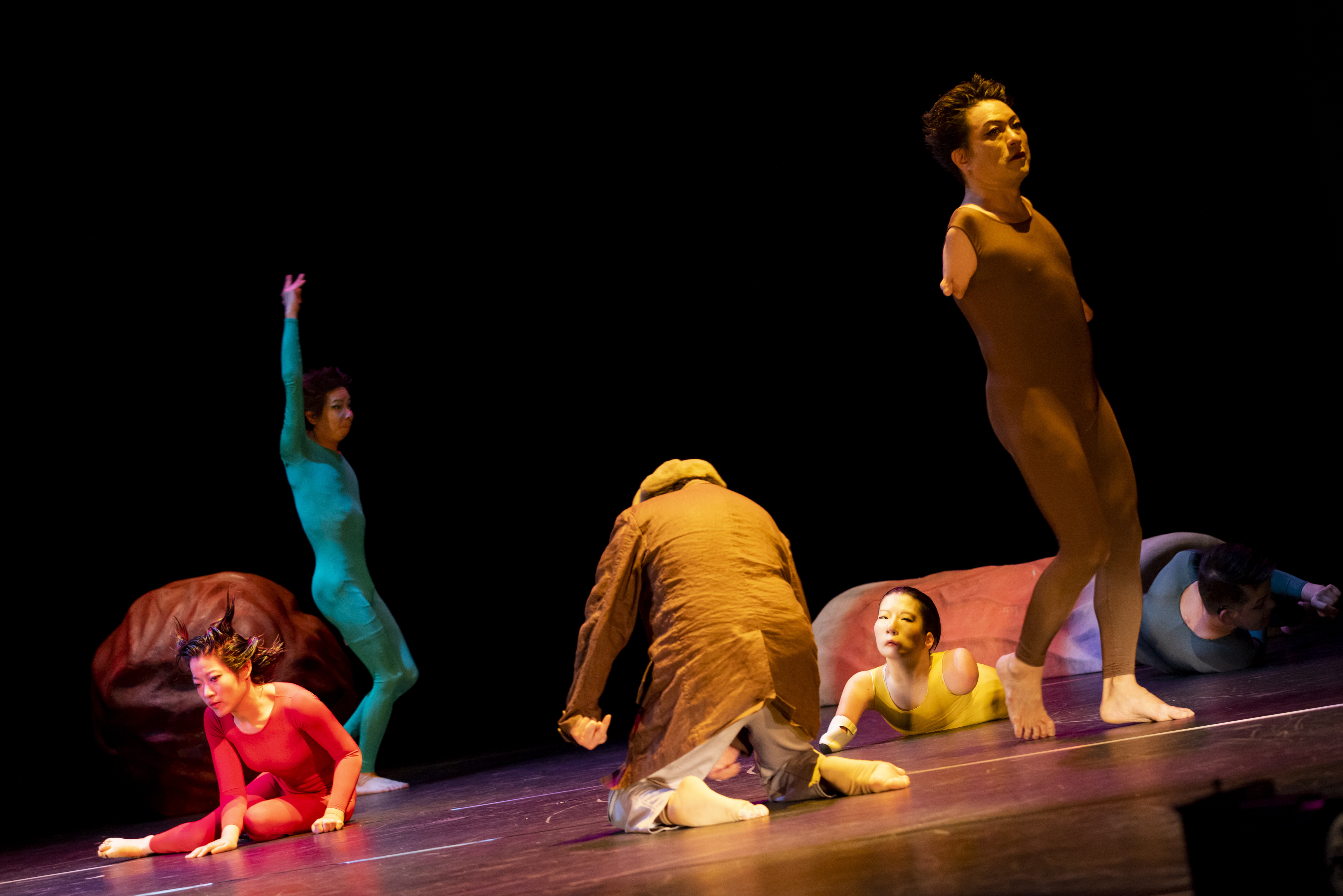
2.Sandbox Bento — Wandering Love: Ha (Break) by TAIHEN, YPAM2021 © Hideto Maezawa
2. Since its inception in 1995 in Tokyo as the Tokyo Performing Arts Market (TPAM), the platform has contributed to numerous international co-productions and brought together industry professionals from Japan and beyond. Could you tell us more about the impact of YPAM over the years, and how it has served as an entry point for cultural exchanges, knowledge sharing and building of networks amongst international professionals engaged in contemporary performing arts?
Hiromi Maruoka: As mentioned in my answer to Question 1, we have repeatedly experienced major turning points approximately every five to ten years. At such moments, values shift dramatically, and the friction between old and new value systems sometimes leads to conflict. Yet, if participation in TPAM/YPAM has provided our colleagues in the arts and culture sector with opportunities to look beyond individual interests and to find, in a broader sense, a shared direction toward the future, nothing would make me happier.
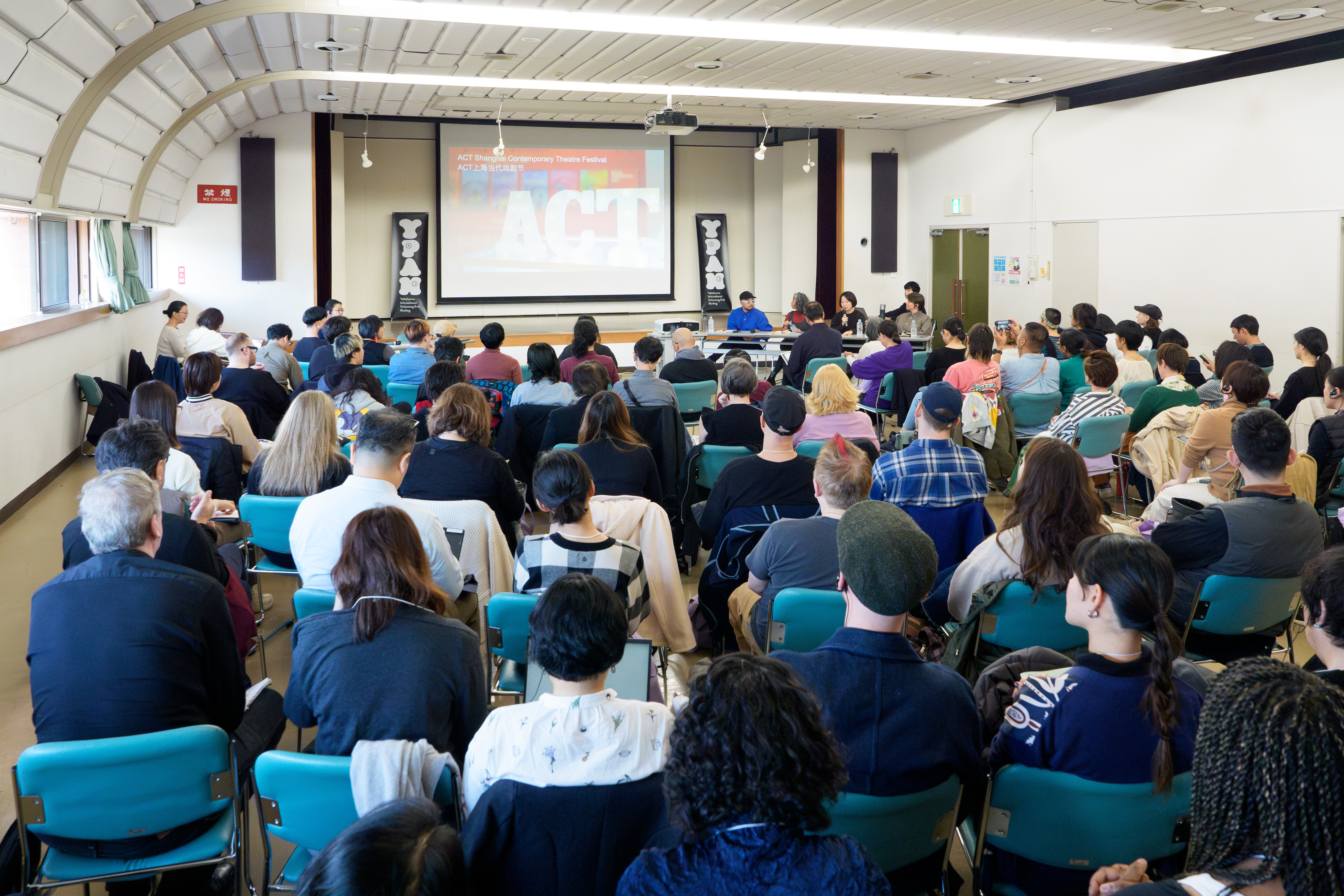
3.Symposium: The Present and Future of International Festivals/Platforms with New Directors ① Collaboration in Asia Oceania at YPAM2024 © Kazuyuki Matsumoto
3. From your perspective, what are some recent trends you have observed after working in the international performing arts scene for so many years? How have these changes and shifts influenced the programming of YPAM?
Hiromi Maruoka: For example, even when works address political or social issues, I sense that the perspective has gradually shifted from a communal one to a more individualistic one. In the background of this shift is the rapid destabilization of the shared values and narrative frameworks that once shaped society. Discourses that have accumulated historically are losing their validity, while language circulating on social media—or even words generated by AI—can be accepted as “truth” without sufficient examination. It feels as if a new, implicit consensus is emerging. In such a climate, a fundamental question re-emerges: What is an “artwork” in the first place? Restructuring YPAM Direction into a forum format is one way of responding to this situation.
4. This year, YPAM’s programme consists of YPAM Exchange, Fringe, Showcase and Direction. Would you please share with us what kind of experience it hopes to create for participants?
Hiromi Maruoka: As I mentioned earlier, in today’s performing arts scene we see more works emerging from personal feelings and experiences rather than from collective or social narratives. In that sense, I think it’s becoming increasingly important to share each individual’s sense of “here and now" and to reconsider how we connect with others and with the world around us.
The four programmes of YPAM — Exchange, Fringe, Showcase, and Direction — are each designed to create spaces for encounter, discovery, sharing, and reflection.
For example, Exchange offers opportunities for artists and professionals from Japan and abroad to freely organize meetings, talk, eat, and interact in the same space. We hope that new collaborations and ideas will emerge naturally from such unstructured encounters.
.jpg)
4. Roundtable: Introduction to Kyoto Experiment’s curator and artist cultivation program at YPAM2024 © Kureo Fujita
Fringe provides a platform for independent presentations, often by first-time participants, where audiences can feel the energy and boldness of experimentation. Showcase, on the other hand, features selected works presented in collaboration with partner organizations in Japan and abroad, offering a shared experience of what contemporary expression can be today.
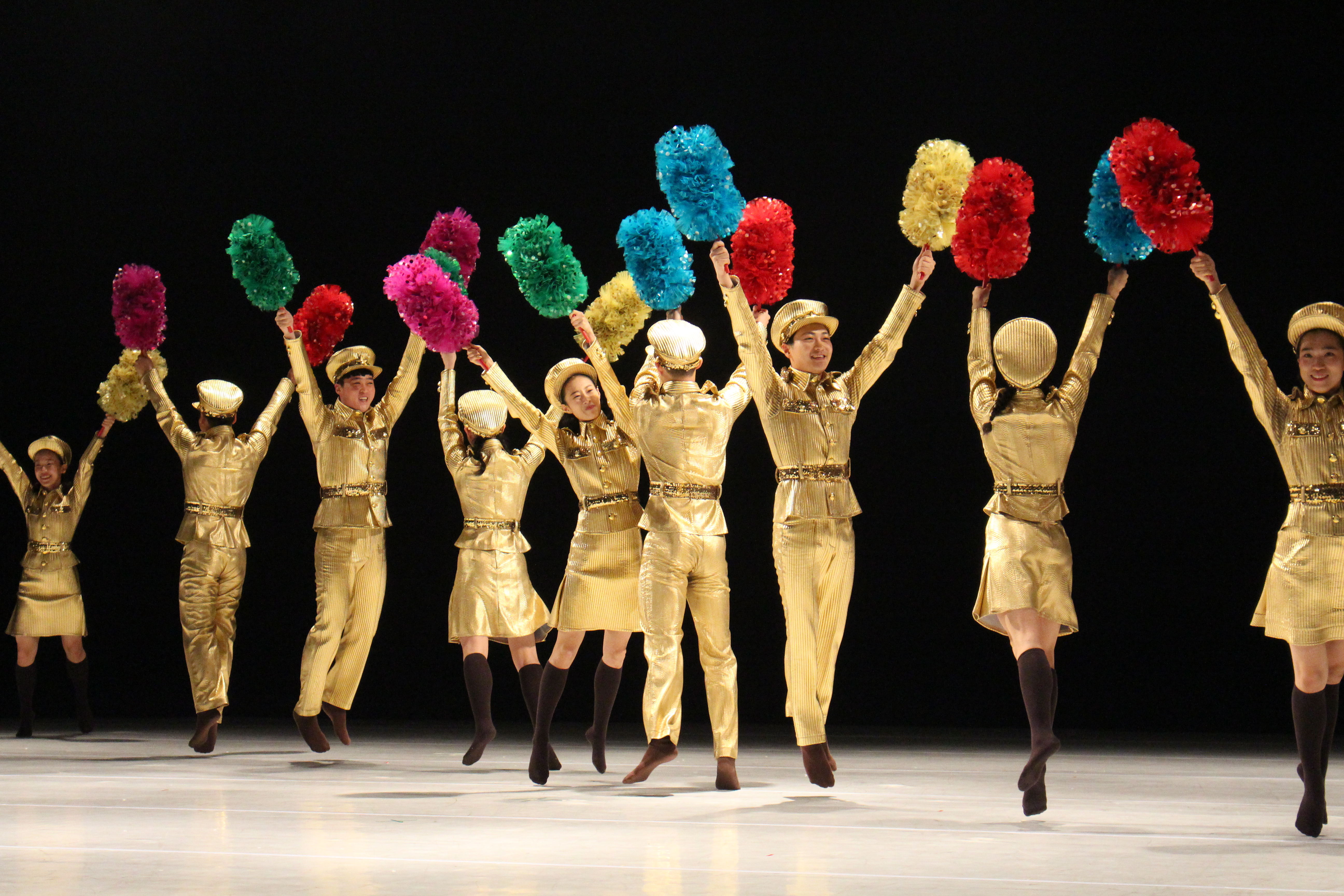
5. YPAM Showcase 2025: North Korea Dance by Eun-Me Ahn © JM Chabot
Finally, Direction focuses on the thinking behind artistic works and projects. Referring to the experience of artist labs across Asia, it invites participants to rethink how creation itself can evolve in today’s context.
Through these four strands, we hope participants will not only “watch” performances, but also meet others, think together, and take something meaningful back with them.
Cover Image: Hiromi Maruoka, Director, Yokohama International Performing Arts Meeting © Kazuyuki Matsumoto
Be a part of Yokohama International Performing Arts Meeting (YPAM) 2025
Period: Friday, November 28 – Sunday, December 14, 2025
Tickets are now available at https://ypam.jp/ticket/index.en.html and professional registration remains open until December 14, 17:00 JST. For details please visit: https://ypam.jp/2025/participation/index.en.html
About the Interviewee
From 1989 to 1998, Hiromi Maruoka worked as a producer and actor with the theater company Gekidan Kaitaisha. Since 1991, she has been with the Japan Center, Pacific Basin Arts Communication (PARC), a non-profit organization dedicated to promoting international performing arts exchange, and was appointed President in 2011. From 2003 to 2004, she trained in New York through the Japanese Agency for Cultural Affairs’ Program of Overseas Study for Upcoming Artists. She has been involved in the performing arts market that preceded the Yokohama International Performing Arts Meeting (YPAM), the Tokyo Performing Arts Market (TPAM), since its inception in 1995, and has served in her current role since 2005. She also serves as Vice President of the Open Network for Performing Arts Management (ON-PAM), a non-profit organization. Her other projects include the Post-Mainstream Performing Arts Festival, the IETM Asia Satellite Meeting, and Sound Live Tokyo. In 2024, she was awarded the Minister of Education, Culture, Sports, Science and Technology’s Art Encouragement Prize.
Since 2012, culture360.ASEF.org has supported the outreach and visibility of over 65 arts events in Asia and Europe. We strive to continue supporting on-site and virtual arts events across the 2 regions through a variety of communication activities. To know more, take a look at our Media Partnerships page and follow us on Facebook and Instagram.